
Resources
/
AI Evaluation
Guides, data stories and answers on evaluating AI with the people who can tell a right answer from a plausible one. Build golden datasets and benchmarks on your own domain, learn where LLM-as-a-judge needs a second opinion, and catch regressions before a release ships.
01
02
The long read · 1 of 3
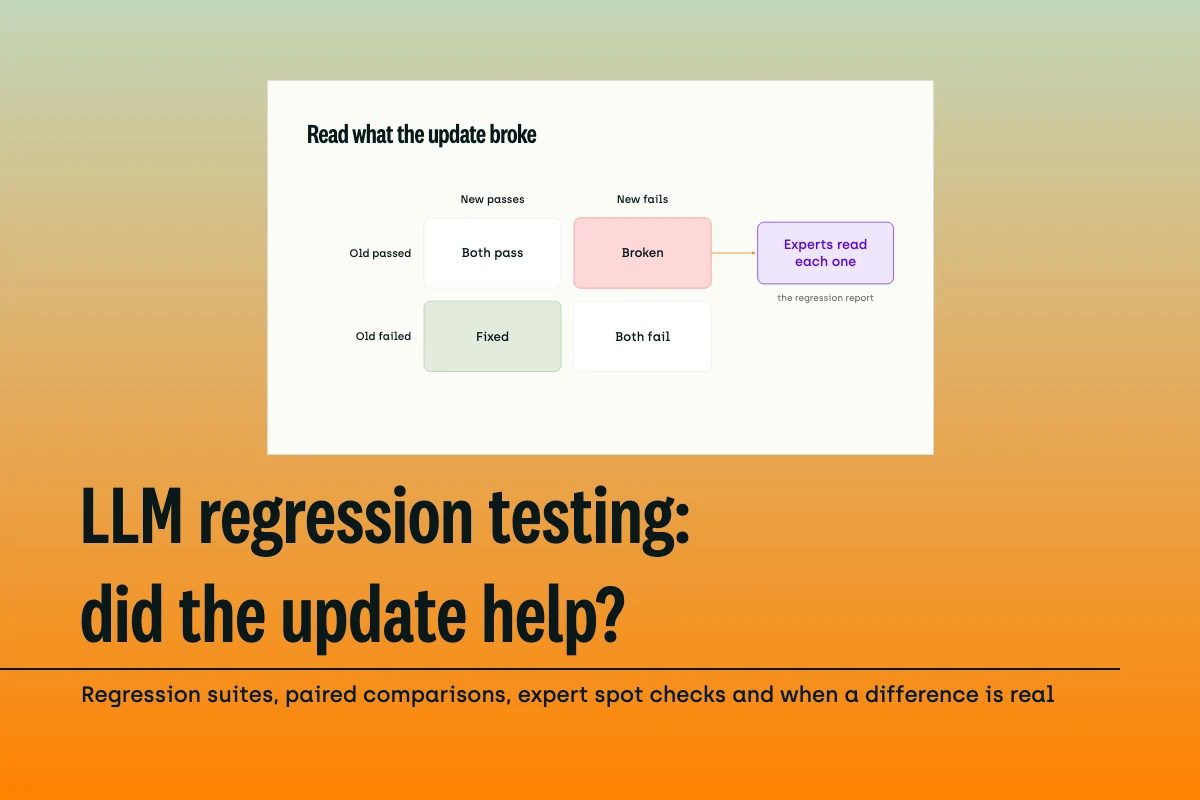
LLM regression testing checks, item by item, whether a model update fixed more than it broke on a fixed expert-graded holdout. Learn how to catch regressions, compare two model versions fairly and tell when a difference is real.
Read the guide
Key takeaways
The long read · 2 of 3
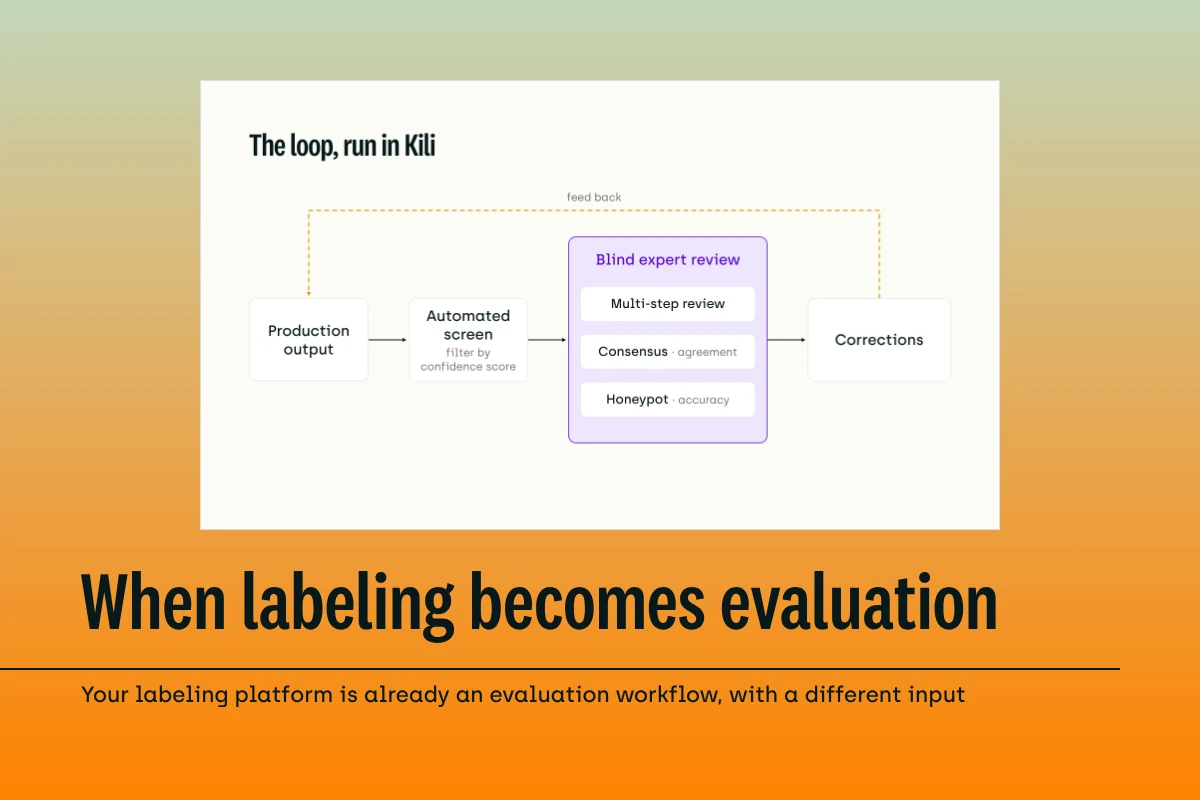
Your labeling platform is already an AI model evaluation workflow with a different input. Here is the six-step loop, and the evidence for why teams break it.
Read the guide
Key takeaways
The long read · 3 of 3
Golden datasets for testing, fine-tuning, and evaluation are three different artifacts. Each has its own quality bar, sourcing method, and failure modes. This guide covers what makes each type effective, where teams go wrong, and how human-in-the-loop annotation infrastructure turns quality principles into measurable, governed datasets.
Read the guide
Key takeaways
Short answers to the questions teams ask us most in this area.
Report
Newsletter
New guides and data stories, by email
New posts from the AI Evaluation, Post-Training and Data Labeling hubs, sent when they go live.