Are you affected by the EU AI Act? Do you know what your obligations and timelines look like? Download our skill to find out.

Download the Skill File →
Product

Auditable, from Day Zero

From the model's first prediction to the expert's final correction, Kili keeps every version of every judgment and the name behind it. Whether you're building training data or evaluating outputs, the record of how your data was made is there before anyone asks for it.

*No credit card required. Risk-free evaluation.

Trusted by the world leaders

Features

Signed, never overwritten

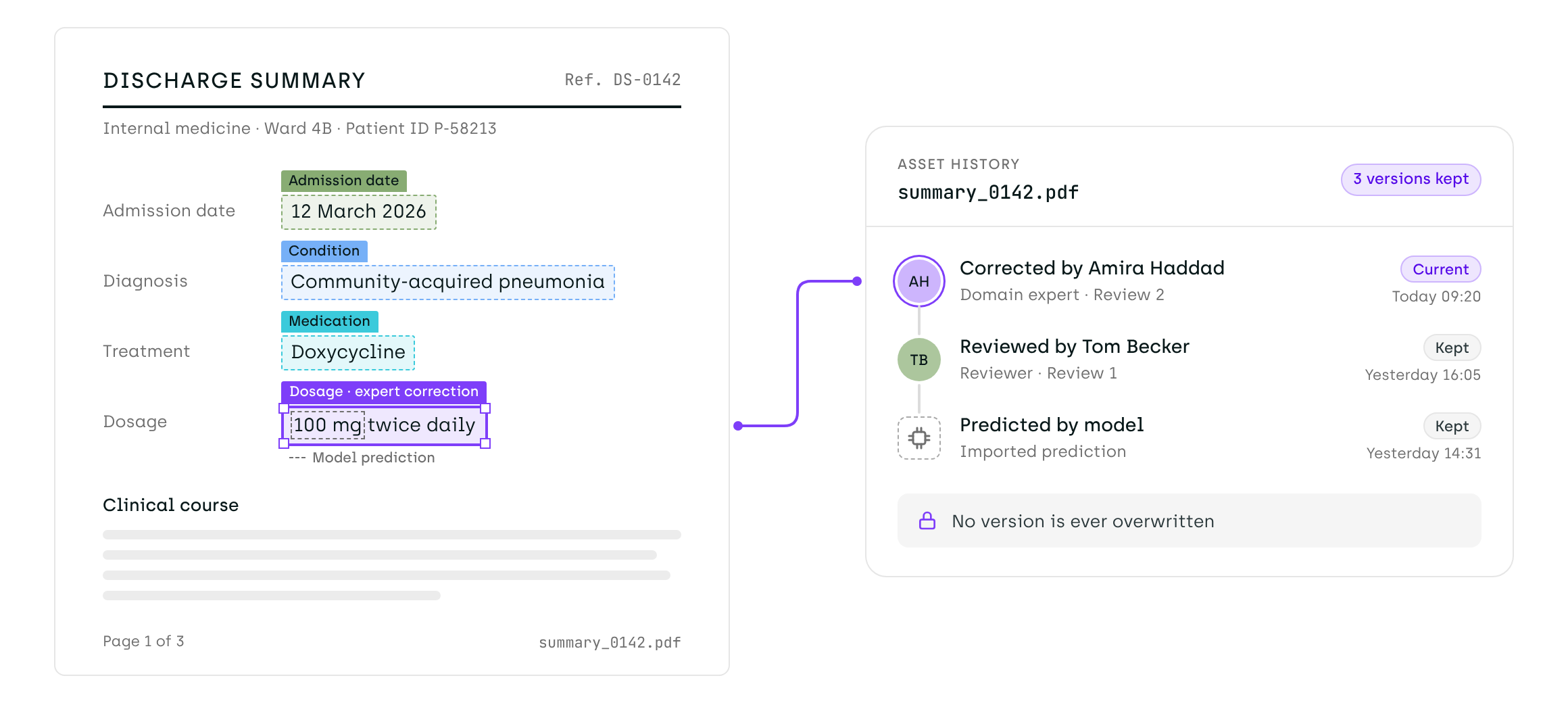
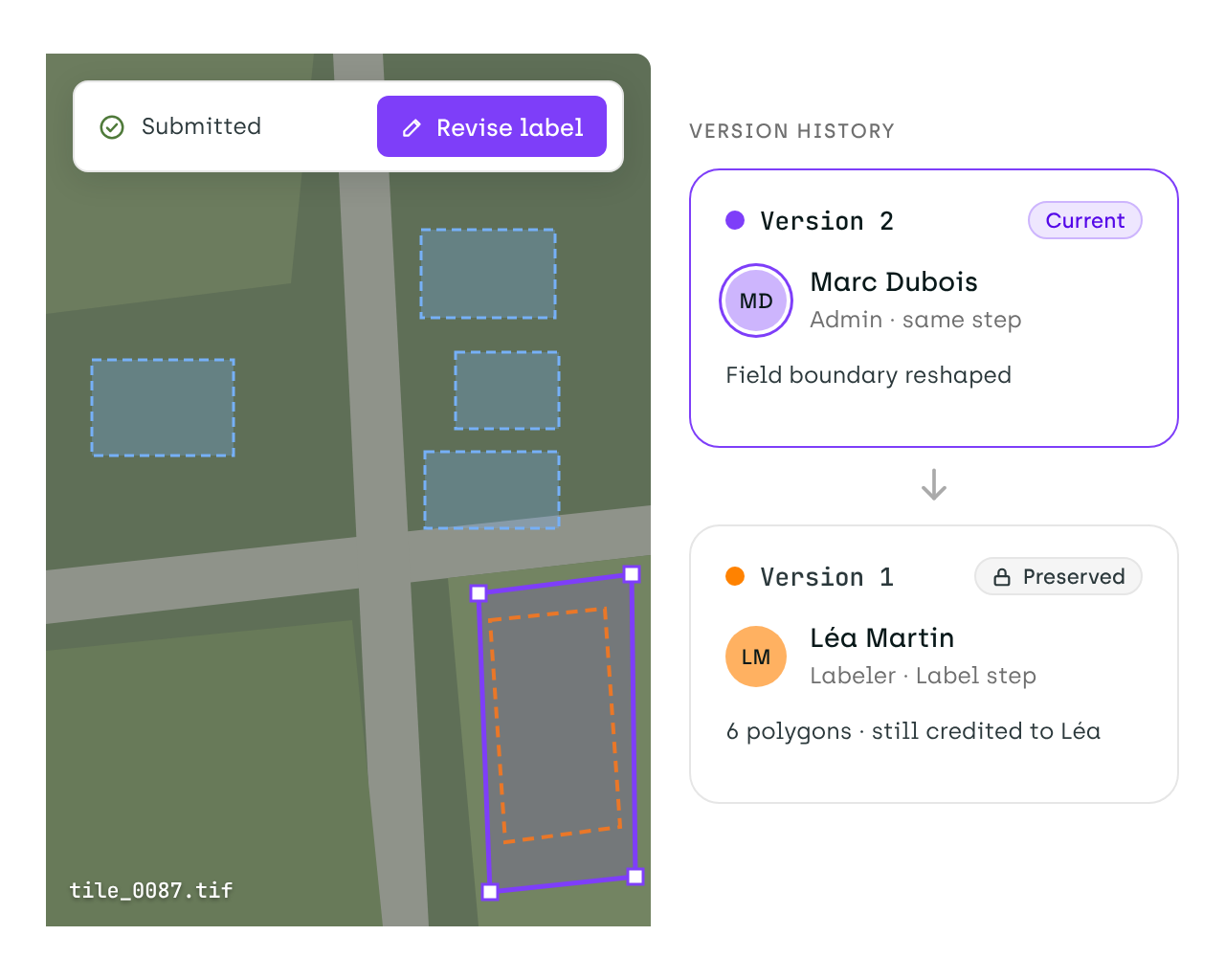
Submitting work in Kili turns it into a version. When a labeler revises after submitting, or an admin corrects a result without adding a review step, the change becomes a new version under their name, with the date and time. The original stays on the asset, still credited to whoever made it.

See how revision works

The whole history, in order

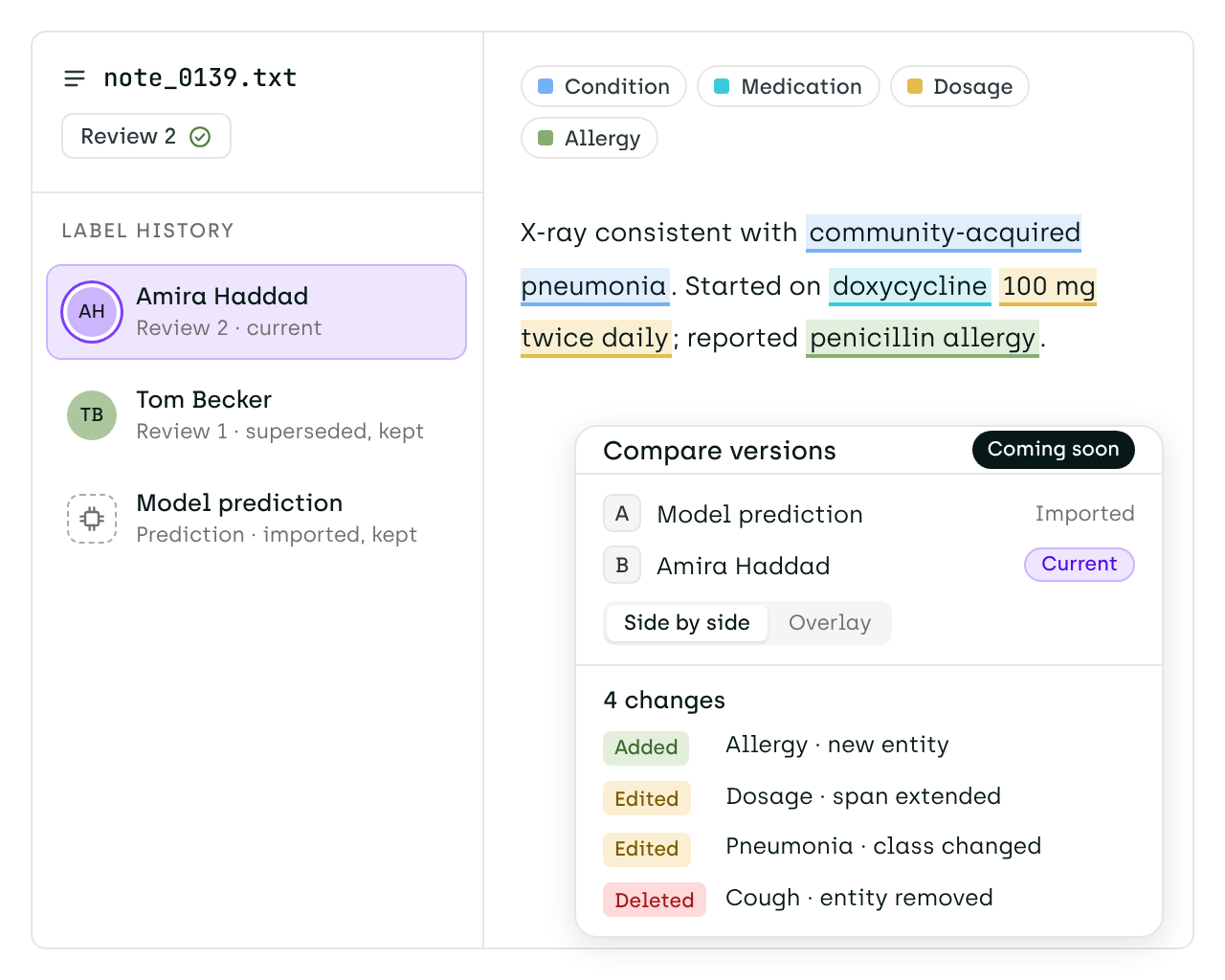
Open any asset in Explore and see what shaped it: the model prediction it started from, then each review and correction, every one named and timestamped. Versions that were superseded stay visible.

Coming soon: compare two versions side by side or as an overlay, with each addition, edit and deletion listed.

See the Explore view

Every project action, logged

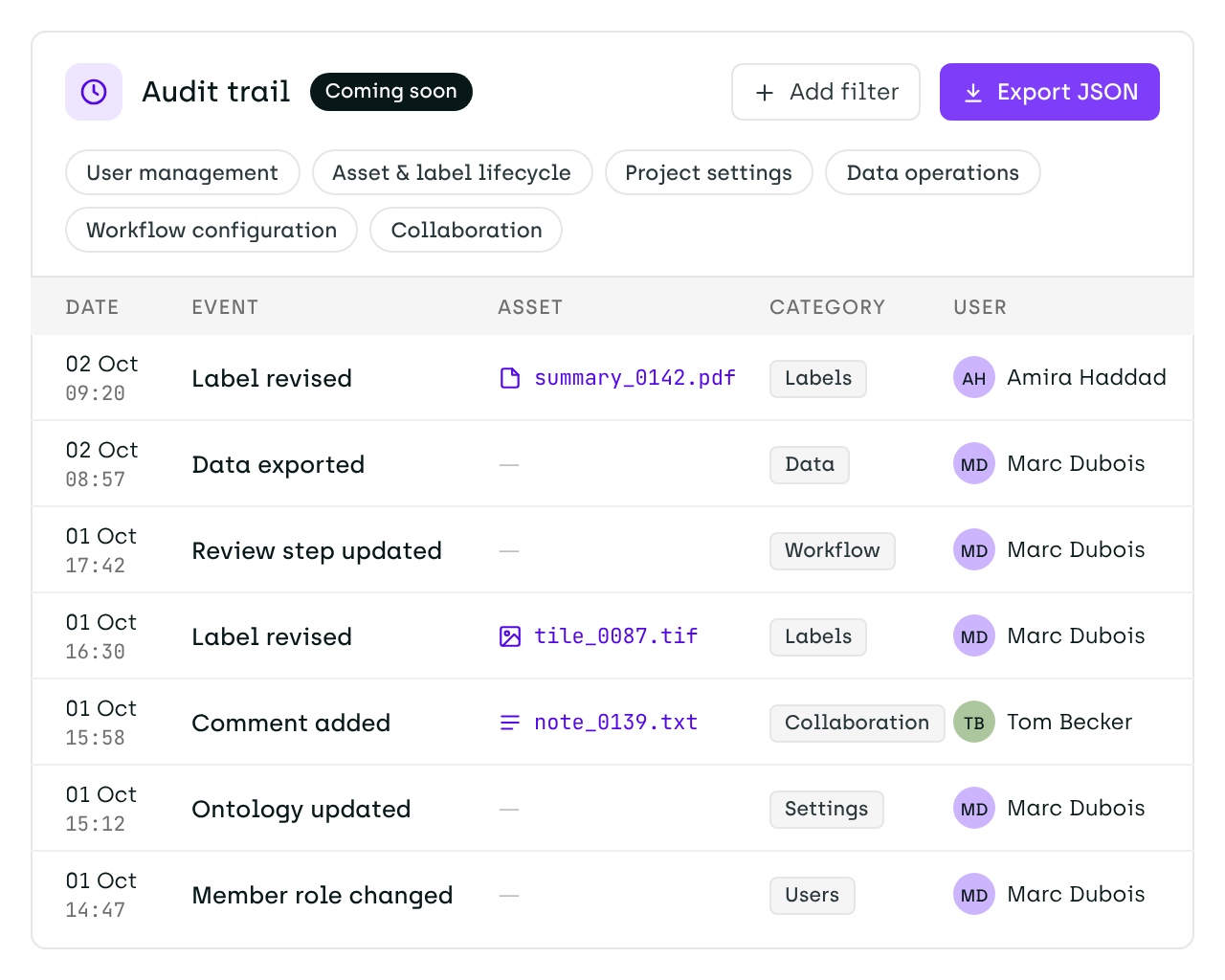
Coming soon. The audit trail records the actions that shape a project, from role changes and ontology edits to workflow changes, label revisions and data exports. Each one is dated, attributed, and linked to its asset where there is one. Filter it to look into an incident, or export it as JSON for your auditors.

Ask about early access

See if Kili is the best fit for your team and your data

Speak to our team for a free 14-day evaluation.

Security essentials for your review

Product photo of breast cell segmentation on Kili Technology's platform
  • Deploy where your data lives

    Run on Kili's cloud, keep your files in your own storage while you do, or install the platform on your own Kubernetes cluster. Attribution and version history work the same way in every mode.
  • Access by role and project

    Three organisation roles and four project roles set who can administer, review or label, and storage integrations can be limited to specific projects. Sign-in uses multi-factor authentication, with SSO through Google or GitHub, and idle sessions end after an hour.
  • Certifications you can check

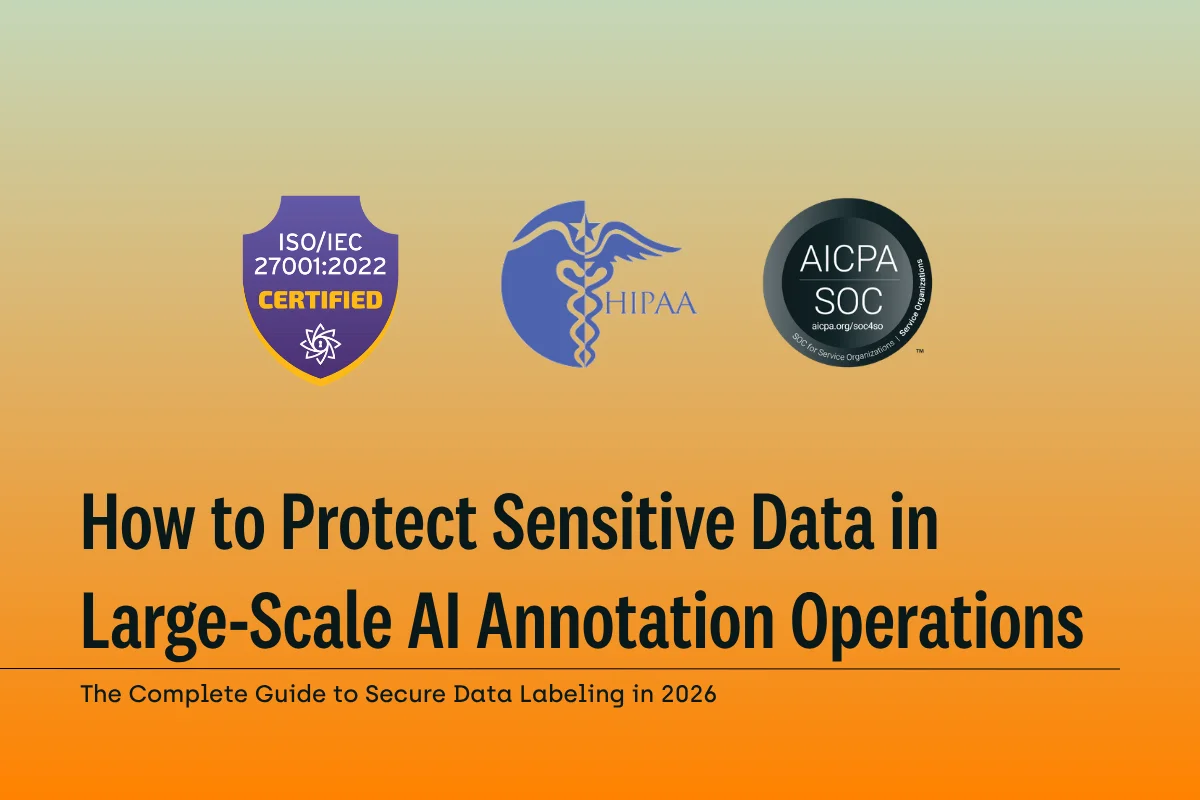
    Kili is ISO 27001:2022 and SOC 2 Type II certified and HIPAA and GDPR compliant, with data encrypted at rest on Kili Cloud. Current status and documents are on the Trust Center, so your reviewer can verify them directly.
Solutions

What you can show afterwards

Proof that a person checked the output

When model outputs are imported into Kili, each one becomes the first version on its asset. Your experts accept it, correct it or send it back, and every step adds a new version with their name and the time, while the model's original stays on record. When someone asks whether a person actually checked the outputs, you can show who did and what they changed.

Explore AI Evaluation
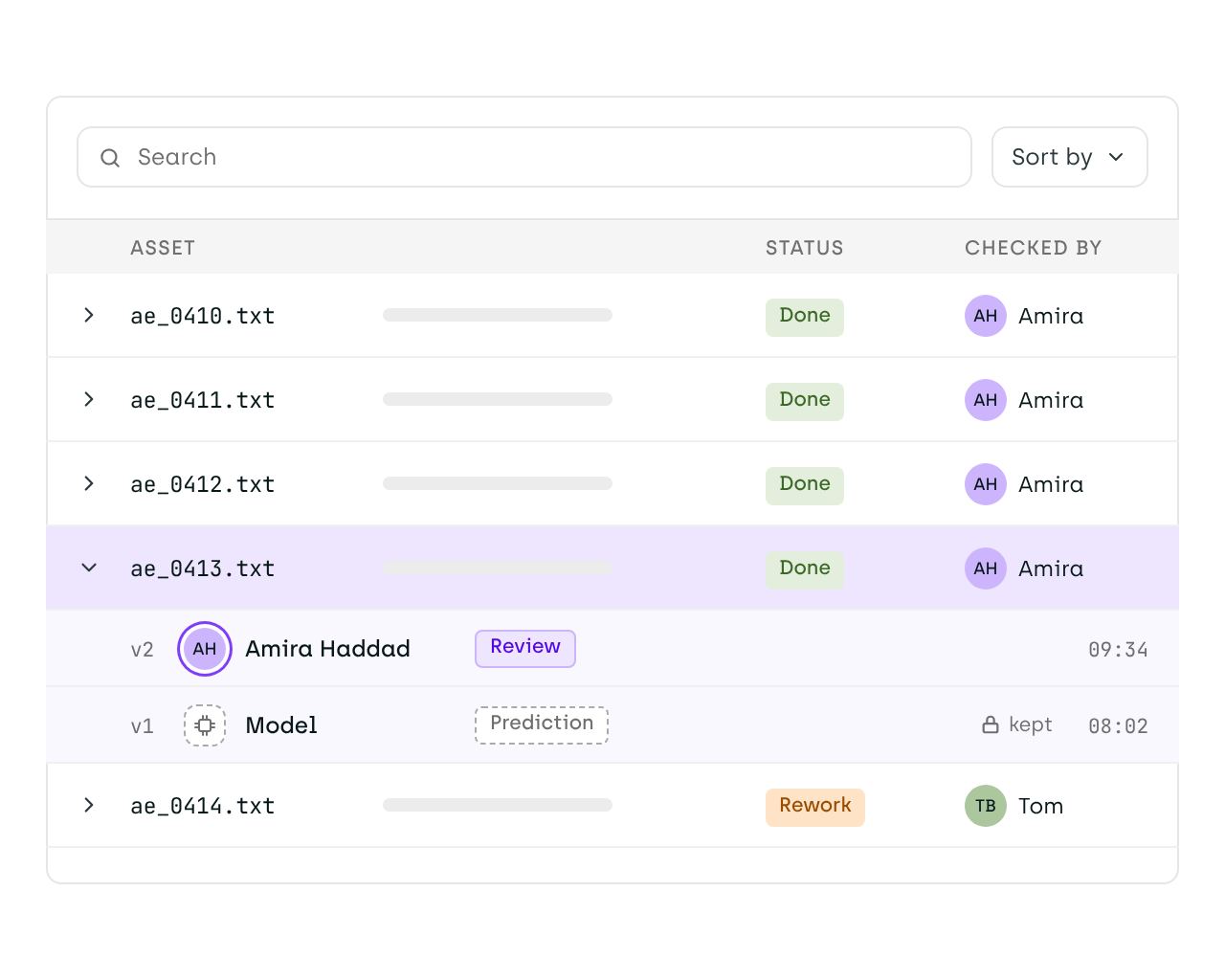
A list of model outputs marked Done with the name of the expert who checked each one. One opens to show the model's prediction kept as version 1 and the expert's review as version 2.

Training data with its history attached

Post-training data often starts as a model's draft that specialists rewrite. Kili keeps all of it: the draft as it arrived, the specialist's revision and the reviewer's sign-off, each a separate version with a name on it. When criteria change and an admin corrects a response, that becomes one more version, and the earlier ones are still there.

Explore Post-Training
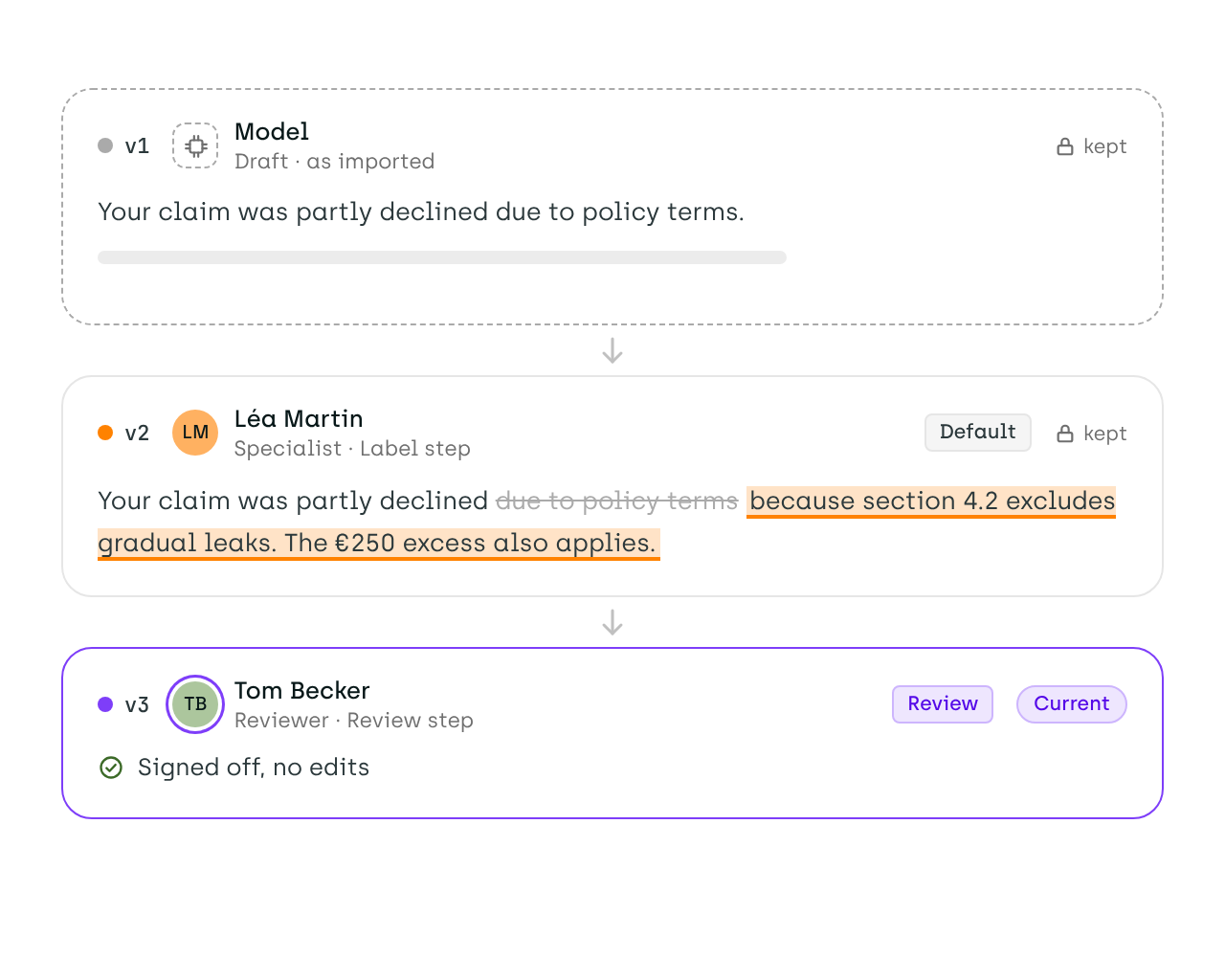
Three versions of a reply to an insurance claim: the model's draft as imported, a specialist's rewrite that cites the exclusion and the excess, and a reviewer's sign-off, with earlier versions kept.

Ground truth with a paper trail

In a regulated file, a label is a decision and needs an owner. Each annotation is saved under the person who made it, a review lands as its own version instead of an overwrite, and Enforce Step Separation keeps labeler and reviewer apart by default. Where several annotators label the same asset, you can see how far they agreed next to the work.

Explore Data Labeling
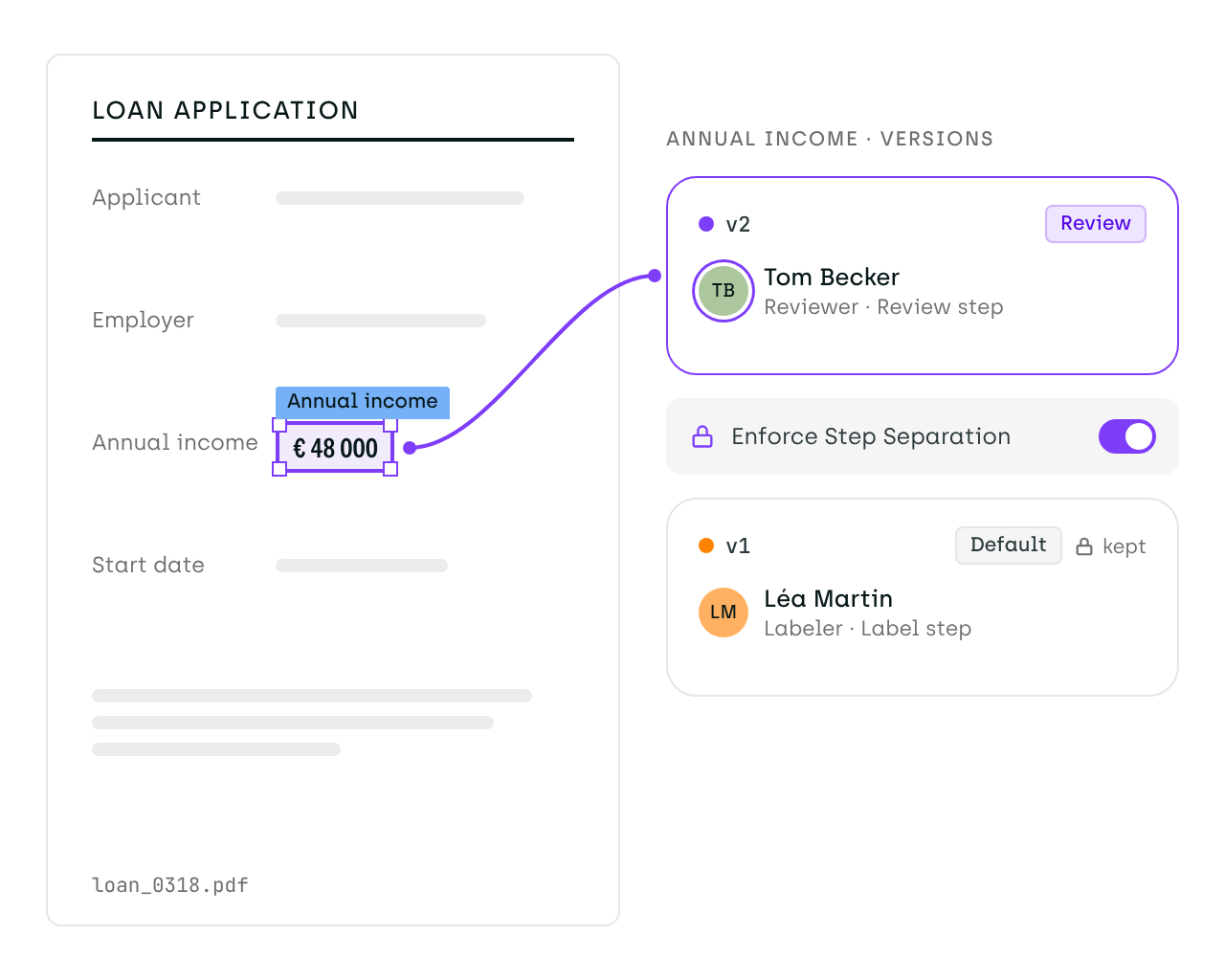
The annual income field on a loan application with two versions: the labeler's original kept as version 1 and the reviewer's as version 2, with Enforce Step Separation turned on.
Tools

Build structured datasets from all data types

Kili Technology is a complete data suite that supports all data types and handles specialized formats for domain-specific requirements.

Geospatial Imagery

Drive reliable mapping and monitoring through high-quality geospatial annotations.

OCR & Document Layout Analysis

Turn unstructured documents into usable data with accurate text extraction and streamlined review workflows.

Natural Language Processing

Annotate text for NER, classification, and sentiment analysis with collaborative workflows.

Image Annotation

Annotate images 10x faster with SAM 2 integration and automated quality controls.

Video Annotation

Annotate long videos seamlessly and boost productivity with advanced automation.

Audio Annotation

Build quality-focused diarization and transcription workflows to improve ASR and Speaker Diarization models for domain-specific and multilingual use cases.

I have been using Kili for 6 months now on a wide range of labeling use cases (both in computer vision and natural language processing). The stability offered by the tool is essential when you have tight deadlines and large volumes of data to annotate. Our team of over 1000 workers is accustomed to the tool, we were able to easily integrate our workforce management tool with Kili with the SSO functionality.
Kili is a powerful and easy-to-use tool for data labeling and annotation. The interface is user-friendly and offers several interesting features. The customer support team is also responsive and helpful.
Software to engage both labelers and business lines in the necessary but tedious task of labeling and annotation, served by a dedicated team to listen to your problems.
Thanks to the fact that our AI infrastructure now includes Kili Technology, we can use the tool for all kinds of projects... LCL teams can accelerate drastically the creation of their training datasets, which means a significant improvement for all the parties involved.
With the choice of Kili, we are much more confident about the future. We decided to eliminate a large part of the technical debt by choosing a solution that will be perfectly mastered across a whole range of data science and AI projects.
FAQ

Need help?

Got questions about Kili Technology? Check out our FAQ. If you can't find it in this list, drop a question for our team.

Can a label or a model prediction be changed after it's submitted?
What does Kili record today, and what's coming?
When will the audit trail be available?
Can Kili help with EU AI Act documentation?
Is version history available on-premise?
Which security certifications does Kili hold?