LCL Bank automates KYC with AI document extraction
Learn how France's LCL Bank transformed regulatory compliance, processing millions of ID documents and DPE forms in weeks instead of months with AI automation.
Where your data has to sit is a constraint, not a negotiation. Use Kili's cloud, keep your files in your own storage while you do, or run everything on your own Kubernetes, and size the infrastructure yourself from published requirements.
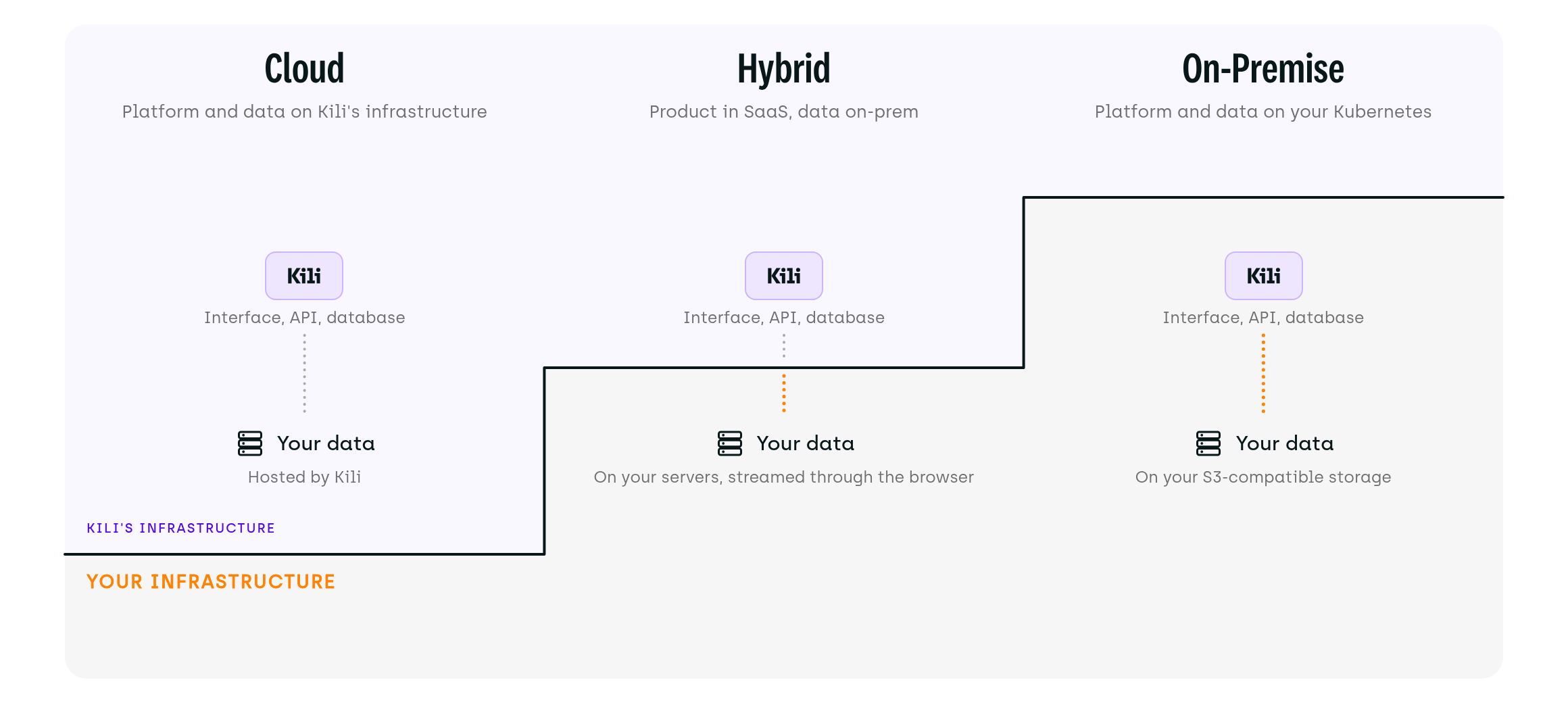
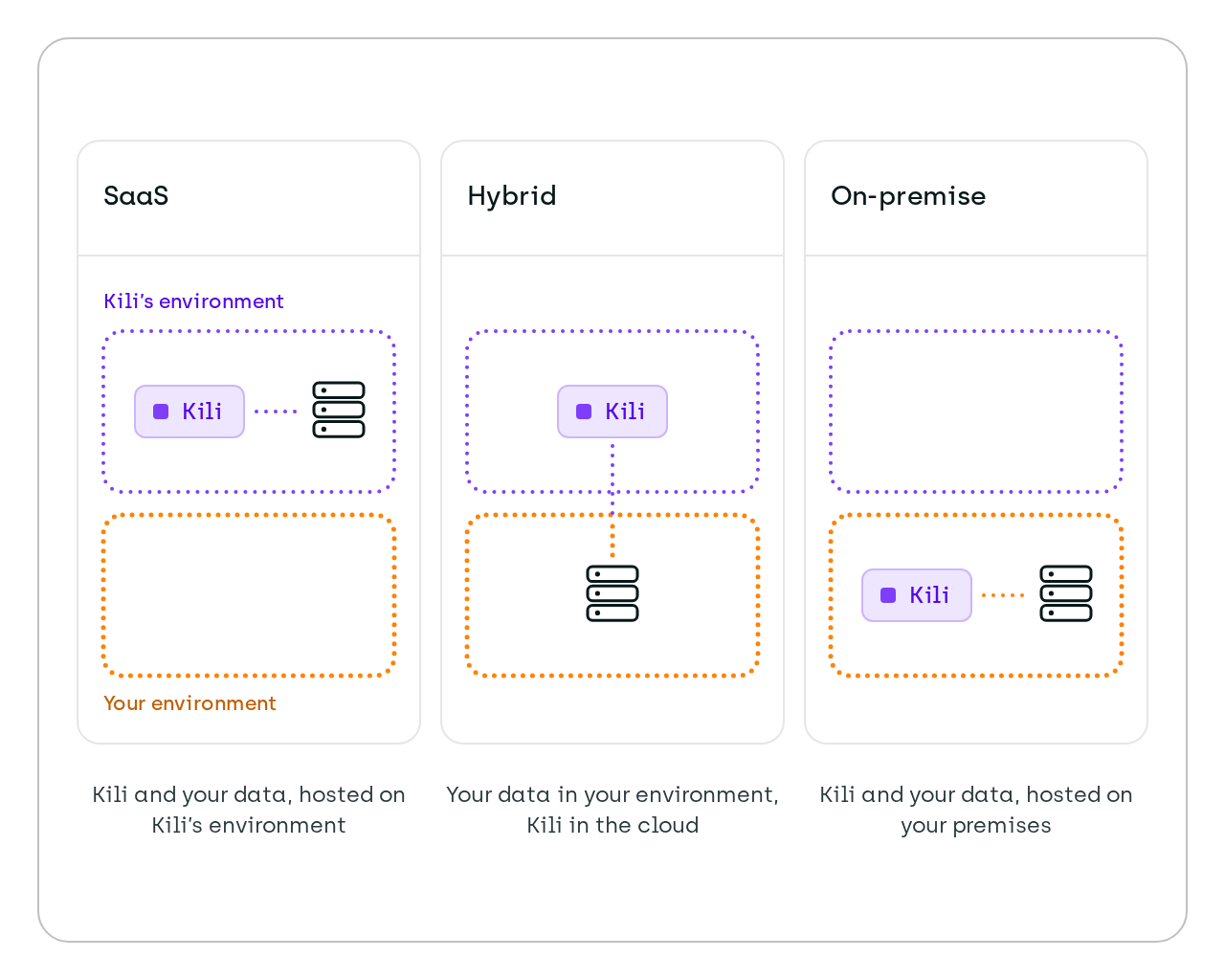
The security review that stalls most platform purchases is one question about where the data sits. Kili answers it three ways, all three documented, so deployment becomes a choice your team makes on its own constraints instead of a negotiation that delays the project.
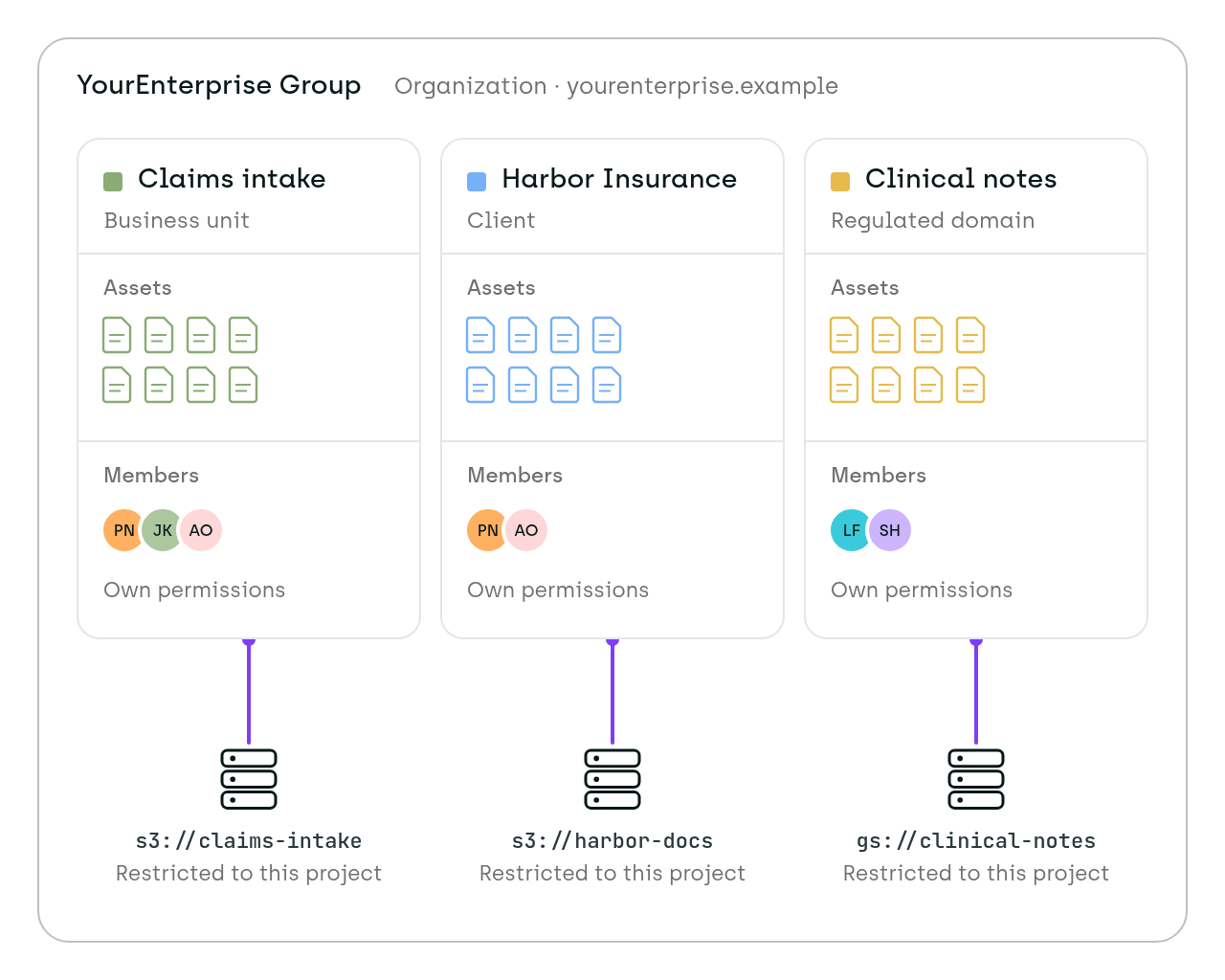
Data from one business unit, client or regulated domain stays out of every other workstream. Each Kili project is its own isolated unit, with its own assets, team and permissions. Storage integrations can be restricted to specific projects, and only organization admins see every project; everyone else sees only the projects they are members of.
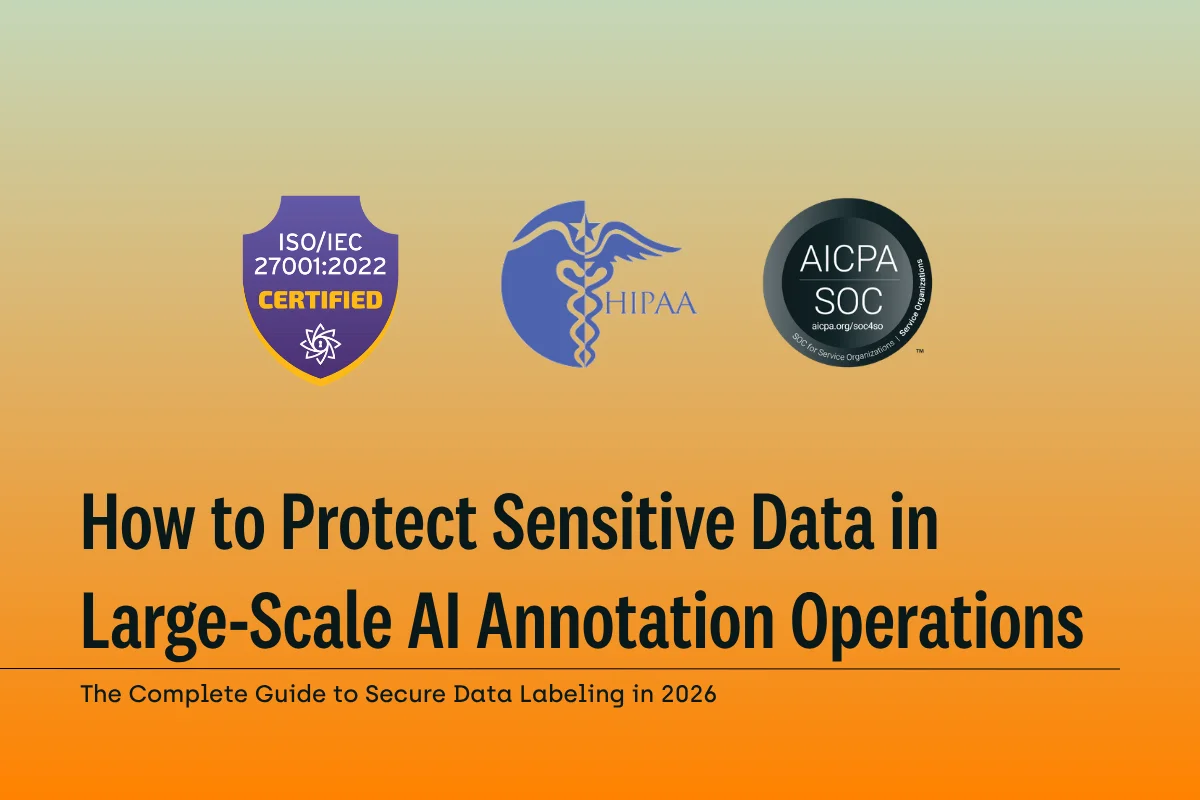
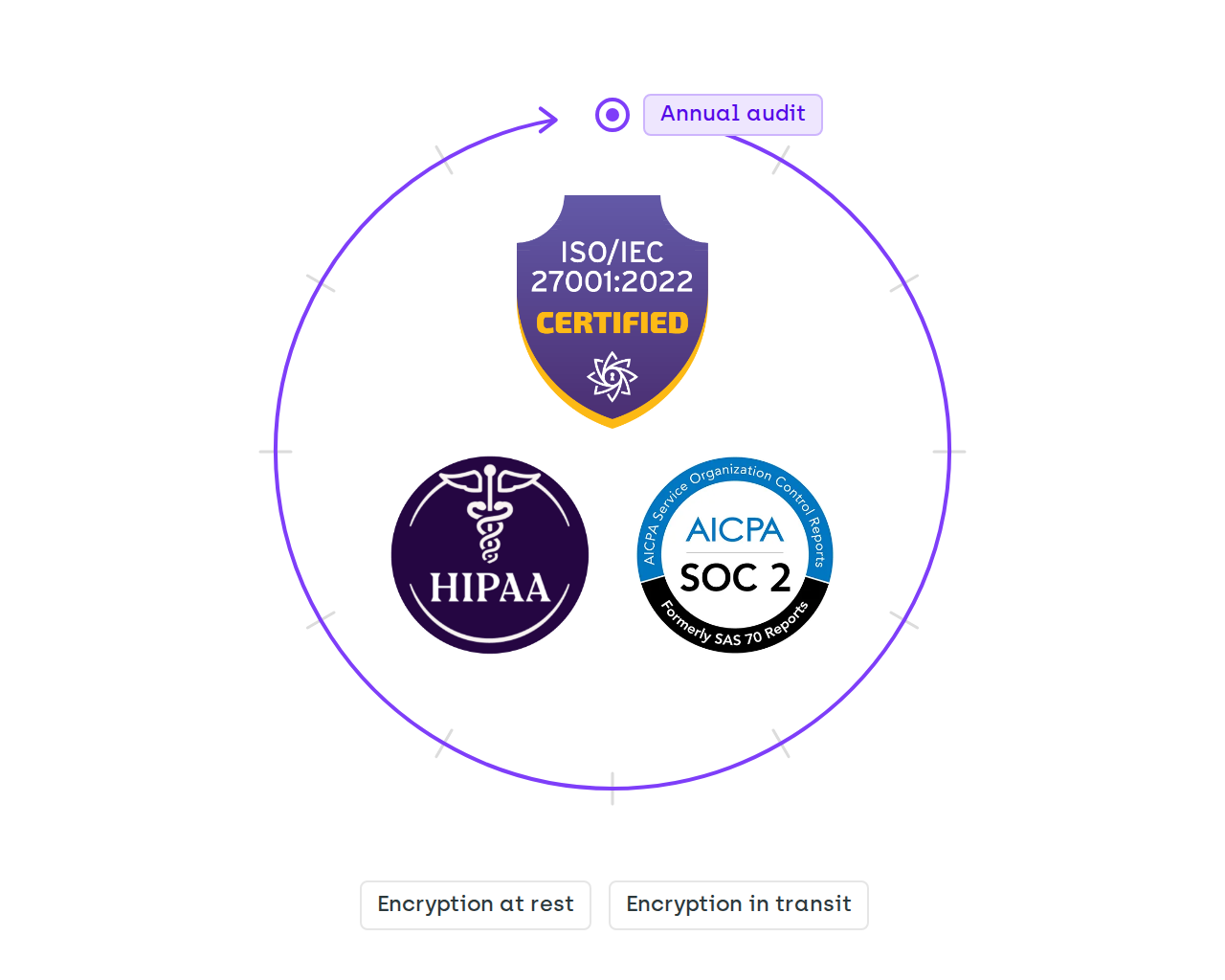
Security procurement and regulatory audit both want proof that is current, not a one-time certificate. Kili maintains SOC 2 Type II and ISO 27001:2022 certification and HIPAA compliance, audited every year, with encryption at rest and in transit as standard.
Speak to our team for a free 14-day evaluation.
.webp)
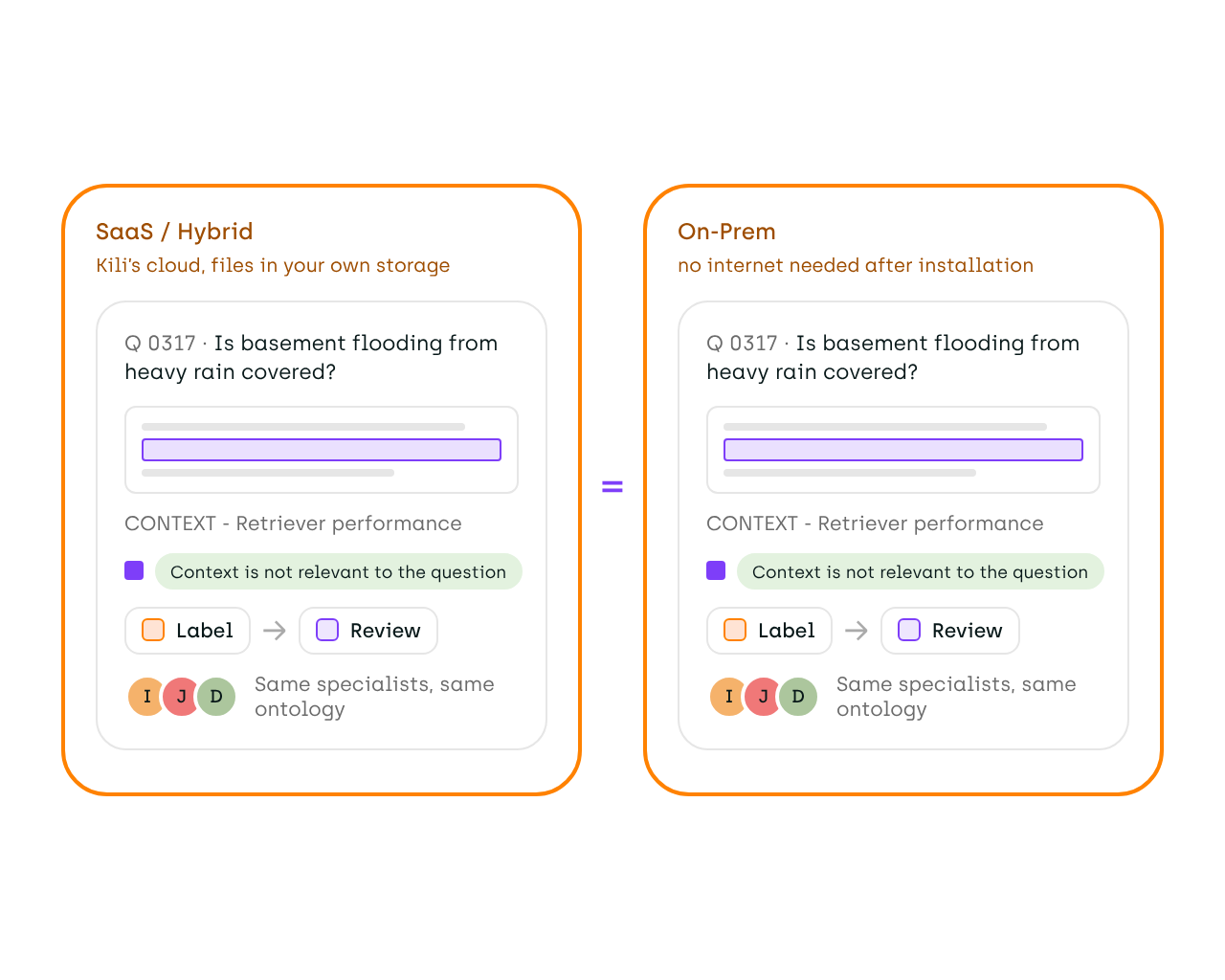
The models worth evaluating are often the ones handling material you cannot copy into someone else's cloud. Run the evaluation where the data already sits: in your own storage bucket while you use Kili's cloud, or on your own cluster with no internet dependency after installation. The specialists judge the same way in either mode, against the same ontology and the same review steps.
Explore AI Evaluation
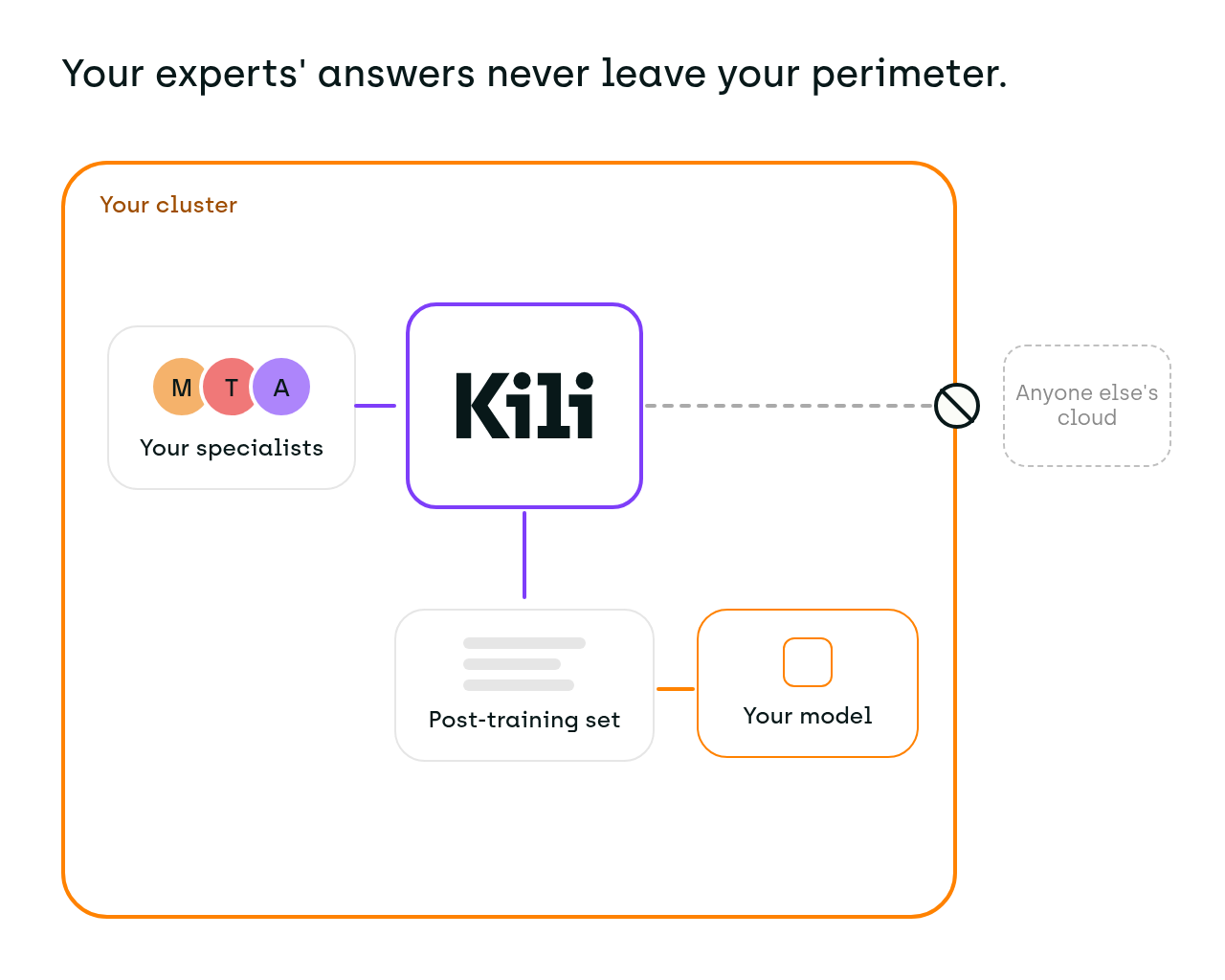
Post-training data is the most sensitive thing your team will produce, because it is your own experts writing down what a correct answer looks like in your domain. That work can run entirely on your own Kubernetes cluster, with no internet dependency after installation. The ontology, the review steps and the export are configured the same way wherever the platform is installed.
Explore Post-Training
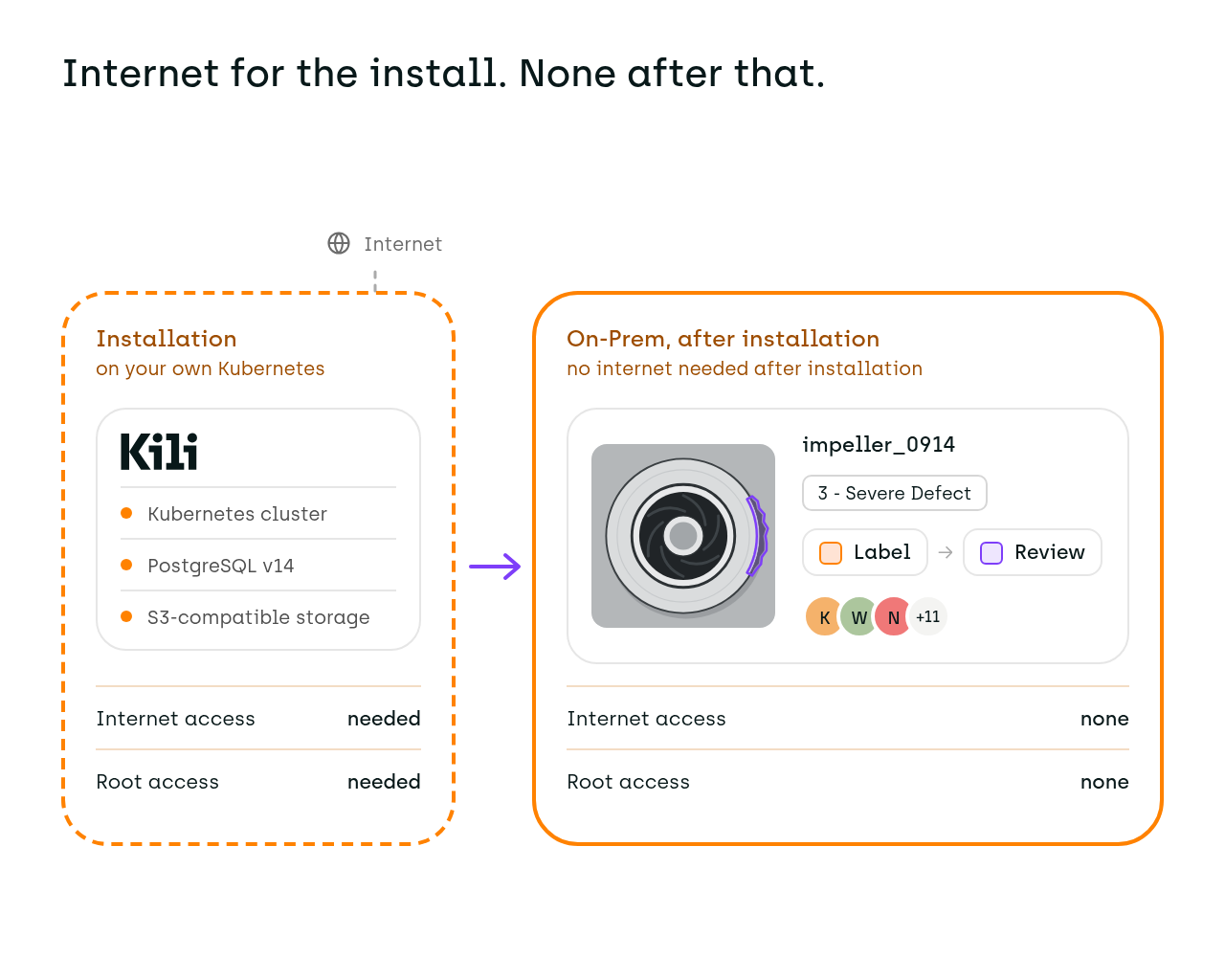
A labeling programme at volume is where the deployment question gets asked first, usually by someone who is not on the project. Kili runs on your own Kubernetes with no internet or root access required after installation, and the published requirements let your platform team size it before the budget conversation starts.
Explore Data Labeling
Kili Technology is a complete data suite that supports all data types and handles specialized formats for domain-specific requirements.
Customer stories from the programs that put this to work — with the numbers behind them.
.png)
.png)
.png)
Stay up to date with fresh content from our team — tutorials, use cases, and ideas to help you train AI/ML models better.
Got questions about Kili Technology? Check out our FAQ. If you can't find it in this list, drop a question for our team.
Three: Kili's managed cloud; Kili's cloud with your assets kept in your own AWS S3, Azure Blob Storage or Google Cloud Storage bucket; and a full on-premise install on your own Kubernetes cluster. The documentation specifies each one, including what the on-premise option requires, so the choice can be made before anyone gets on a call.
For a minimum configuration supporting 20 labelers or 5 reviewers: a Kubernetes cluster of at least three nodes for high availability, at 4 CPU and 12 GB RAM per node; a PostgreSQL v14 server at 4 CPU, 16 GB RAM and 100 GB storage, with the TimescaleDB community plugin version 2.19.x; and S3-compatible object storage, which can be AWS S3, Google Cloud Storage, Azure Blob or a local Minio installation.
Kili's on-premise deployment needs internet access and root access during installation, and neither afterwards. Kili does not describe this as an air-gapped deployment, and the difference matters in a procurement review. What is documented is that there is no internet dependency after installation, not a certified air gap.
It is the same application in each mode: the labeling interface, the workflow configuration and the ontology do not change. What changes is the small set of features needing Kili's backend to read your raw files. Video import fails where the backend cannot reach the files, and interactive segmentation needs the storage integration to allow asset processing on Kili's servers.
On Kili's cloud, we do, and that includes projects whose files sit in your own storage. For an on-premise installation the upgrade cadence is agreed with your team, so ask how it maps to your change-control process before you sign.
A self-hosted open-source tool is free to install, but keeping it correct, secure and up to date falls to your own engineers. Kili publishes what its on-premise deployment requires before you install it, runs the same application in all three deployment modes, and documents which features behave differently when the backend cannot read your files. Consensus, honeypot, multi-step review and per-labeler quality scores come with every project, instead of being assembled around an open-source core.
Kili holds ISO 27001:2022 and SOC 2 Type II certification, and is HIPAA and GDPR compliant. Controls are monitored in real time through Vanta. The current status and supporting documents are on Kili's Trust Center, so a security reviewer can check them directly.
Yes. Kili installs on your own Kubernetes cluster, with the PostgreSQL database and S3-compatible storage inside your own infrastructure, and needs no internet or root access once it is installed. Teams that prefer a managed option can use Kili's cloud and keep their files in their own cloud storage. LCL, a French retail bank, runs Kili on-premise and has put more than 13 million documents through KYC checks.
Yes. Kili integrates natively with AWS S3, Azure Blob Storage and Google Cloud Storage, so assets stay in your bucket and the annotator's browser loads files directly from your storage, without processing on Kili's servers. Features that need Kili to process files on its servers, such as interactive segmentation, depend on an authorization you grant when you set up the integration. Assets in Kili's cloud storage and in your own storage cannot be mixed.
Each project has its own members, each added with a project role: Labeler, Reviewer, Team Manager or Project Admin. Those roles apply only within the projects a member is assigned to. Organization admins are the only users with access to every project, and the only ones who can create and manage cloud storage integrations. Enforce Step Separation, on by default, also stops one person from working on more than one step for the same asset.
Yes, Kili is GDPR compliant, as shown on its Trust Center. On Kili's cloud, data is hosted on Google Cloud, in a data center in Belgium. Teams whose data must stay elsewhere can keep their files in their own cloud storage, or deploy Kili on their own infrastructure.