.png)

_logo%201.svg)


AI Summary
- AI pilots stall because of validation gaps, not model capability gaps
- LLM-as-a-Judge works as a triage mechanism, not an autonomous arbiter of truth
- Human-in-the-loop corrections become the highest-quality training signal when captured as structured data
- Custom benchmarks built by domain experts outperform generic leaderboards for production deployment decisions
- Auditability must be designed into the workflow from day one — it cannot be retrofitted
- Kili Technology provides a report to put strategy into practice, and offers solutions for high-quality, auditable data.
Enterprise AI has a validation problem — and it's bigger than most teams realize. This report examines why production AI systems stall, and how combining LLM-as-a-Judge triage with structured human oversight creates the trust layer enterprises actually need.
Why Do Enterprise AI Pilots Keep Stalling?
Enterprise adoption of generative AI accelerated throughout 2025. Models got better. Access expanded. Investment increased. Yet the gap between pilot and production remains stubbornly wide — and the bottleneck is rarely the model itself.
Research from McKinsey, Gartner, MIT Sloan, NIST, and the OECD converges on the same conclusion: reliability, governance, and oversight determine whether AI systems scale. Not model size. Not parameter count. Not benchmark scores on public leaderboards.
The pattern is remarkably consistent. Teams run a pilot on typical prompts, early demos look strong, initial users are excited — and then edge cases appear. In production, input distributions shift. Users ask for action, not just information. Accountability becomes explicit. Without a mechanism to route uncertain cases to qualified humans, trust collapses within weeks.
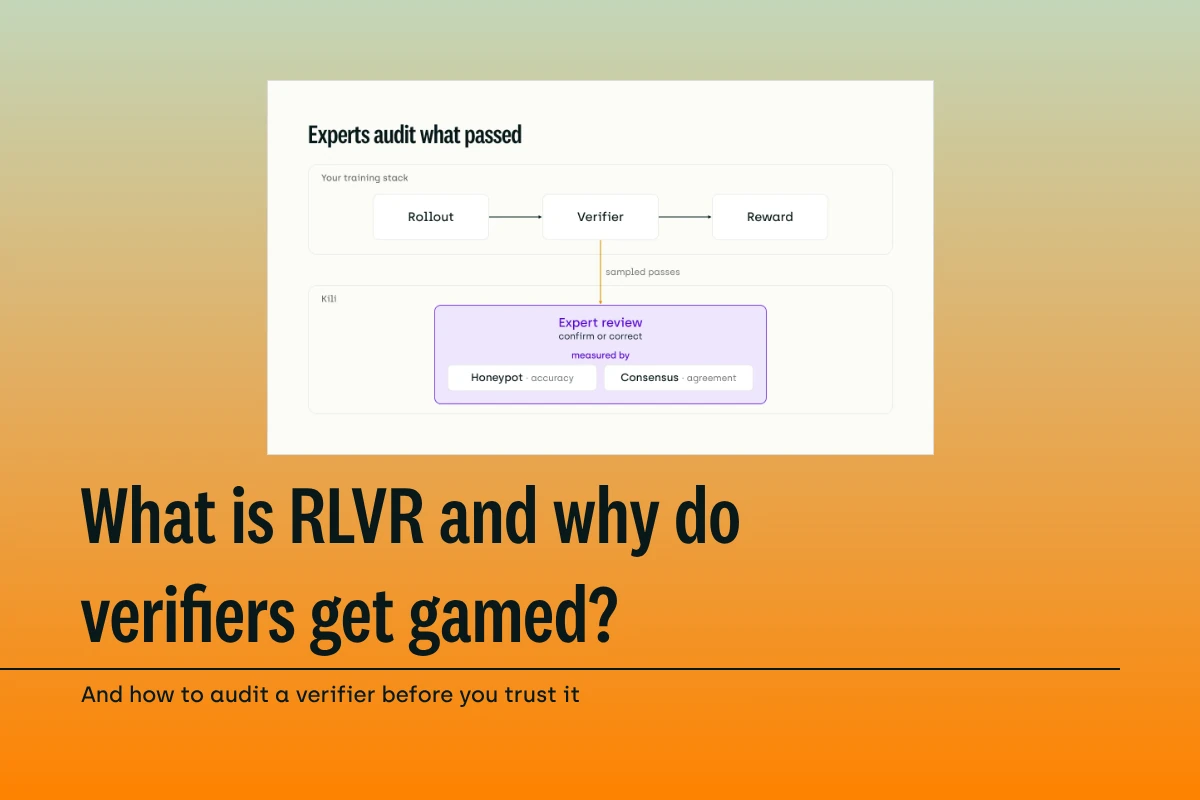
The root cause is the absence of a validation system, not the absence of a capable model. Organizations need infrastructure that can define what "good" means in their specific domain, detect when outputs violate that definition, route uncertain cases to experts, and turn every correction into reusable training and evaluation data.
This is the central argument of Kili Technology's February 2026 report, Building Trusted GenAI with LLM-as-a-Judge and Human-in-the-Loop Workflows — and it has direct implications for how enterprise AI teams should be spending their time right now.
What Is the Shadow AI Gap — and Why Should It Worry You?
Here's the uncomfortable reality: enterprises are not short on AI tools. They are short on trusted AI. When official enterprise systems produce outputs that employees can't rely on, those employees route around them. They use personal ChatGPT subscriptions and external copilots to iterate and self-validate — even when that introduces obvious security and compliance risk.
This is the shadow AI gap: the distance between what employees need from AI outputs and what approved systems can reliably provide. The report frames shadow AI not as an adoption failure, but as a symptom of low-trust outputs. Your users aren't rejecting AI. They're rejecting outputs they can't trust.
The implications are serious. When employees self-validate in unapproved tools, the enterprise loses control of sensitive data, decision provenance, and auditability. Even if the model quality is acceptable, the governance gap is not.
What matters to measure here isn't just usage statistics — it's the percentage of employees using unvalidated AI for work, the specific tasks driving shadow usage, and the trust drivers (accuracy, flexibility, speed, citation fidelity) that users rank highest. These metrics tell you where the validation gap actually lives.
How Should Enterprises Structure a Validation Stack?
The report proposes a four-layer validation architecture that mirrors how quality systems have worked in manufacturing and regulated industries for decades: specifications, inspection, exception handling, and continuous improvement.
Translated to AI, that becomes: rubrics define quality → LLM judges triage at scale → humans resolve high-risk cases → corrections feed back as structured data.
Each layer depends on the one before it. Without clear rubrics, judges score against vague criteria and human reviewers apply inconsistent standards. Without calibrated judges, every output requires human review — which doesn't scale. Without structured human correction, the system never improves. And without versioned evaluation data, you can't replay, audit, or learn from past decisions.
What breaks this stack in practice is predictable: rubrics are vague, judges score holistic "quality" instead of specific criteria, humans review without structured labels, and corrections aren't captured as reusable data. Every one of these failure modes is addressable — but only if you design the validation pipeline intentionally.
Why Are Rubrics the Hardest Part of the Validation Pipeline?
Most teams underestimate rubric design. The report argues — correctly — that the rubric is the control surface for the entire validation system. When the rubric is weak, everything downstream (automated judges, human review, evaluation data) becomes inconsistent.
The difficulty is real. Domain quality is often implicit and tacit — the kind of thing experts recognize instantly but struggle to articulate. Requirements conflict: speed versus completeness, strictness versus usability. Edge cases define risk but are underrepresented in initial guidelines. And different experts will disagree until criteria are made explicit.
The report outlines a seven-step rubric development process worth internalizing. It starts with defining the decision the output supports (not just "is the answer good?" but "what decision will this output influence?"). It separates correctness from usefulness — factual accuracy and compliance are different from completeness and workflow fit. It declares non-negotiables (in high-risk contexts, hallucination tolerance is effectively zero). It creates severity tiers: critical errors (unsafe, non-compliant, materially incorrect), major errors (misleading enough to cause rework), and minor errors (stylistic, formatting).
The step most teams skip: counterexamples. A rubric becomes usable when it includes concrete examples of what fails and why. Without these, reviewers default to personal judgment — and consistency drops immediately. The final steps — piloting with disagreement tracking and versioning the rubric like code — ensure the rubric evolves as the domain does.
This is where subject matter experts add the most leverage. It's also where embedding SMEs throughout the AI lifecycle makes the greatest difference — not at the end of the pipeline as a final check, but at the beginning, where rubric design shapes every evaluation that follows.
What Makes an LLM-as-a-Judge Reliable Enough to Deploy?
LLM-as-a-Judge (LAJ) systems use language models to apply rubric criteria at scale. Done correctly, they function as a pre-screening layer, a consistency layer, an uncertainty detector, and a routing mechanism for human review. Done incorrectly, they simply automate subjective judgment.
The report is clear-eyed about the risks. Research documents systematic biases in LLM evaluators: position effects (preferring the first or last response in a comparison), verbosity preferences (rewarding longer answers regardless of quality), and self-enhancement bias (models rating their own outputs higher). An LLM judge that agrees with itself 95% of the time is not 95% accurate — it is 95% consistent, and you don't yet know the difference.
What makes an LLM judge reliable enough to use in production comes down to five properties. First, rubric grounding: the judge must score against explicit criteria, not holistic "overall quality." Second, calibration against expert gold labels — you need to compare judge scores to what human domain specialists actually say. Third, systematic bias and leakage checks. Fourth, disagreement routing: when the judge is uncertain or when multiple judges disagree, the output goes to a human. Fifth, ongoing drift monitoring, because as workflows shift, judge behavior shifts with them.
The key insight is that LLM judges should route attention, not declare truth. A single judge becomes a single point of failure. For high-risk flows, the report recommends using disagreement checks between multiple judges — treating judge disagreement itself as a signal for escalation.
When Should Humans Be In the Loop — and When On the Loop?
Once rubrics exist and judges can triage, the human role becomes clearer — and more strategic. The report distinguishes between two oversight models that serve different purposes.
Human-in-the-loop (HITL) applies when the output is high-stakes (compliance, legal exposure, clinical decisions), when the cost of error is large, and when the domain requires licensed accountability. Every output passes through human review before release. This is the right model for contract redlining, diagnostic validation, and regulatory submissions.
Human-on-the-loop (HOTL) applies when volume is high, risk is moderate, and you can monitor outcomes and intervene selectively. Humans audit samples, review flagged outputs, and escalate when something breaks pattern. This scales better but requires robust monitoring infrastructure to know when intervention is needed.
The report's most important insight about human oversight is this: humans are not "cost." Humans are the highest-quality labels in the system. A validation system only improves if corrections become structured data — corrections logged, failure reasons tagged per rubric category, edge cases converted into explicit test items, and new evaluation sets versioned and replayed.
The common failure mode is that humans correct outputs but the system fails to capture why they corrected them — losing the training signal entirely. When that signal is captured systematically, human review becomes the feedback loop that makes everything else in the pipeline better over time.
What Does Good AI Evaluation Actually Look Like in Practice?
The report grounds its framework in four real-world scenarios that illustrate each layer of the validation stack.
The full report walks through four detailed scenarios — contract redlining at a global law firm, diagnostic AI validation in healthcare, claims document processing at a European insurer, and visual defect detection on a manufacturing production line. Each illustrates a different layer of the validation stack: rubric design, structured consensus, multi-step validation with full traceability, and continuous monitoring with active learning.
The common thread across all four: the fix was never a better model. It was a better validation system — one that defined quality in domain-specific terms, routed uncertainty to the right experts, and turned every correction into structured data that made the next iteration stronger.
Why Do Generic Benchmarks Miss What Matters?
Generic leaderboards like MMLU, HumanEval, and MT-Bench answer one question: how does this model rank against other models on standardized tasks? Custom benchmarks answer a fundamentally different question: will this model work reliably in your specific environment, with your data, against your definition of failure?
The differences are structural. Generic benchmarks use public standardized datasets; custom benchmarks use your production data — messy, incomplete, and domain-specific. Generic benchmarks evaluate general quality and fluency; custom benchmarks evaluate against your rubric — compliance, clinical safety, citation integrity, whatever "correct" means in your domain. Generic benchmarks classify errors as pass/fail; custom benchmarks use severity tiers mapped to your actual risk tolerance. Generic benchmarks are evaluated by automated metrics or crowd raters; custom benchmarks are evaluated by your domain experts — attorneys, clinicians, underwriters, engineers.
The report identifies five properties that make a custom benchmark trustworthy: designed by domain experts, built from production-representative data, severity-tiered, versioned and repeatable, and cleanly separated from training data. Without that last property, benchmark scores measure memorization, not capability.
Good benchmarks are curated, not sampled. Most evaluation sets are built by sampling randomly from production data. That captures the average case well but misses the long tail — rare document formats, ambiguous inputs, adversarial phrasing, edge-case regulatory language — where production failures concentrate. A benchmark that underrepresents these cases will overestimate model readiness. Building a trustworthy benchmark means deliberately surfacing edge cases, weighting errors by consequence rather than frequency, and continuously expanding the set as new failure modes appear.
Why Does Auditability Need to Be Designed In From Day One?
The regulatory landscape is catching up with enterprise AI deployment — and fast. The EU AI Act already bans prohibited AI practices and, starting August 2026, will enforce high-risk system obligations covering data quality, logging, traceability, and human oversight — with full enforcement following in 2027. The NIST AI Risk Management Framework treats risk management as lifecycle-wide and iterative. In financial services, SR 11-7 on Model Risk Management formalizes independent validation and effective challenge as continuous expectations. The window to build auditability into your AI systems before regulators require it is closing.
Audit questions are fundamentally data lineage questions: which rubric version applied to this decision? Which reviewers contributed — and what was their consensus? Was this sample used for evaluation, for training, or both? Can you reconstruct why a decision was made or overturned?
Manual documentation cannot answer these at scale. The report argues that auditability is not a feature you add after deployment. It emerges from workflow design — or it does not emerge at all. That means versioned rubrics establishing evaluation criteria before review begins, immutable review logs capturing every decision with timestamps and reviewer IDs, role-separated workflow records distinguishing annotation from review from arbitration from approval, and exportable lineage metadata for auditors and compliance teams.
The common failure mode is instructive: teams log review outcomes but not the reasoning behind them, turning audits into forensic exercises rather than routine exports.
What Does This Mean for Enterprise AI Teams in 2026?
The report's central thesis is that competitive advantage in enterprise AI will not come from access to models — it will come from the design of validation systems. The models are increasingly commoditized. The differentiator is whether you can reliably define, measure, and enforce quality in your specific domain, at production scale, with full traceability.
This means investing in rubric design as seriously as you invest in model selection. It means treating LLM-as-a-Judge as an infrastructure component that requires calibration, monitoring, and human grounding — not as a replacement for human judgment. It means building HITL and HOTL workflows that capture structured correction data, not just pass/fail decisions. And it means building evaluation as a continuous data pipeline, not a one-time gate before launch.
The enterprises that get this right will ship AI systems that scale. The ones that don't will keep running impressive pilots that stall somewhere between month three and month six — a timeline the report maps with uncomfortable precision.
Ready to Build a Validation System That Scales?
Kili Technology provides both the collaborative AI data platform and the expert services to design, operate, and continuously improve production validation pipelines — from rubric design through multi-step review to exportable audit trails. Whether you need the infrastructure to run expert-driven evaluation or the domain specialists themselves, start a free evaluation period and test with your actual production data.
Resources
Kili Technology
- Building Trusted GenAI with LLM-as-a-Judge and Human-in-the-Loop Workflows — The full February 2026 report
- https://kili-technology.com/large-language-models-llms/building-trusted-genai-with-llm-as-a-judge-and-human-in-the-loop-workflows
- Data-Centric Strategies to Improve AI Adoption in Enterprises — January 2026 whitepaper on embedding SMEs across the data lifecycle
- https://kili-technology.com/large-language-models-llms/data-centric-strategies-to-improve-ai-adoption-in-enterprises
- Human-in-the-Loop, Human-on-the-Loop, and LLM-as-a-Judge — Guide to AI oversight patterns
- https://kili-technology.com/large-language-models-llms/human-in-the-loop-human-on-the-loop-llm-as-a-judge-guide-to-ai-oversight-patterns
- Keys to Successful LLM-as-a-Judge and HITL Workflows — Hybrid architecture guide
- https://kili-technology.com/large-language-models-llms/keys-to-successful-llm-as-a-judge-and-human-in-the-loop-workflows
- Multi-Step Review for AI Data Quality — Enterprise workflow documentation
- https://kili-technology.com/data-labeling/multi-step-review-for-ai-data-quality
Research and Analysis
- The State of AI — McKinsey's global AI investment analysis
- https://www.mckinsey.com/capabilities/quantumblack/our-insights/the-state-of-ai
- GenAI Blind Spots for CIOs — Gartner research on shadow AI and enterprise adoption
- https://www.gartner.com/en/articles/3-bold-and-actionable-predictions-for-the-future-of-genai
- State of AI in Business — MIT Sloan framework for moving from AI experimentation to deployment
- https://mitsloan.mit.edu/ideas-made-to-matter/moving-ai-experimentation-deployment-a-four-step-framework
Governance and Regulatory Frameworks
- NIST AI Risk Management Framework (AI RMF 1.0) — Lifecycle risk governance for AI systems
- https://airc.nist.gov/AI_RMF_Interactivity/
- EU AI Act — Article 14: Human Oversight — Binding legislation on high-risk AI human oversight
- https://artificialintelligenceact.eu/article/14/
- OECD AI Principles — Internationally endorsed governance guidance
- https://www.oecd.org/en/topics/sub-issues/ai-principles.html